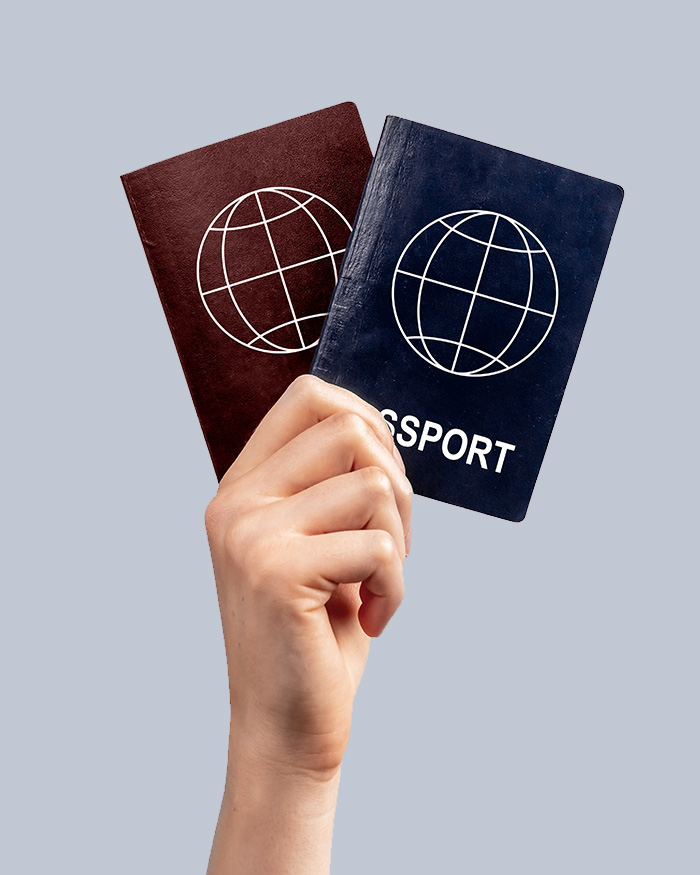
Two Passports — One Journey: The Art of Traveling with Dual Citizenship
Holding two passports is not only a symbol of high status, but also a powerful tool that opens up new travel horizons. However, dual citizenship carries certain responsibilities: you must clearly understand which document to present at each stage of your trip.
Below is a detailed guide on how to properly use two passports to make your travel as smooth, comfortable, and legally sound as possible.
The Fundamental Rule: "One Journey — One Document"
The key principle to remember: you must use the exact same passport to enter and exit a country. If you crossed a border using Passport A, you are legally required to depart using Passport A as well. This allows border authorities to correctly close your visit record in their database.
Phase 1: Departure
At the departure airport, you will present your passport three times. It is crucial not to mix them up:
Phase 2: Arrival at Destination
Arrival is straightforward: at passport control, present the exact document you showed the airline during check-in. The destination country's immigration authorities will log you into their system under this passport as an arriving tourist or citizen.
For your return journey, mirror the process in reverse.
Special Cases and Important Considerations
Statutory Requirements by Country
Some nations legally mandate that their citizens enter and exit exclusively on their national passport. For example, U.S. citizens who hold a second citizenship (such as German) are required by law to enter and leave the United States using their U.S. passport.
Traveling Within the Schengen Area
If you entered a Schengen country (e.g., Greece) on a European passport, travel within the Schengen Zone typically occurs without border checks. However, if your itinerary includes a non-Schengen EU country (e.g., Cyprus or Ireland), you will go through passport control again using the passport with which you entered the European Union.
Overland Travel by Car, Bus, or Train
Practical Tips for Dual Citizens
Conclusion
Dual citizenship is the key to true freedom of movement. It eliminates the need for lengthy visa applications and opens access to fast-track "citizens-only" corridors at airports worldwide. Knowing how to manage two passports properly makes every journey seamless, predictable, and stress-free.
Ready to Expand Your Horizons?
A second passport is an investment in your personal security, mobility, and future. If you are exploring options for obtaining citizenship or residency through investment or Golden Visa programs, choosing the right jurisdiction tailored to your family's needs is essential.
Take the first step toward global mobility today. Contact Step In Estate to schedule a private consultation and unlock a world without borders.
Holding two passports is not only a symbol of high status, but also a powerful tool that opens up new travel horizons. However, dual citizenship carries certain responsibilities: you must clearly understand which document to present at each stage of your trip.
Below is a detailed guide on how to properly use two passports to make your travel as smooth, comfortable, and legally sound as possible.
The Fundamental Rule: "One Journey — One Document"
The key principle to remember: you must use the exact same passport to enter and exit a country. If you crossed a border using Passport A, you are legally required to depart using Passport A as well. This allows border authorities to correctly close your visit record in their database.
Phase 1: Departure
At the departure airport, you will present your passport three times. It is crucial not to mix them up:
- Check-in: Show the passport that gives you the right to enter your destination country. Your airline ticket must be issued under this exact passport. The airline needs to verify that you have valid legal grounds to land at your final destination (a visa or visa-free privilege).
- Passport Control (Exit Inspection): Present the passport you used to enter the country you are currently leaving. The border officer is not concerned with where you are flying; their sole task is to register your lawful departure.
- Boarding Gate: The process mirrors check-in—show the passport that matches your ticket and that will be used upon arrival.
Phase 2: Arrival at Destination
Arrival is straightforward: at passport control, present the exact document you showed the airline during check-in. The destination country's immigration authorities will log you into their system under this passport as an arriving tourist or citizen.
For your return journey, mirror the process in reverse.
Special Cases and Important Considerations
Statutory Requirements by Country
Some nations legally mandate that their citizens enter and exit exclusively on their national passport. For example, U.S. citizens who hold a second citizenship (such as German) are required by law to enter and leave the United States using their U.S. passport.
Traveling Within the Schengen Area
If you entered a Schengen country (e.g., Greece) on a European passport, travel within the Schengen Zone typically occurs without border checks. However, if your itinerary includes a non-Schengen EU country (e.g., Cyprus or Ireland), you will go through passport control again using the passport with which you entered the European Union.
Overland Travel by Car, Bus, or Train
- Bus / Train / Ferry: The logic remains identical to airport travel—use the passport that grants entry into the next country.
- Car: When crossing a land border, you can switch passports in the "neutral zone." Show Passport A when exiting the border post of Country A, and present Passport B at the entry post of Country B. Always ensure your vehicle insurance and registration documents match the identity you present.
Practical Tips for Dual Citizens
- Privacy: Utilizing different passports allows you to segment your travel history, which can be useful when visiting countries with complex diplomatic relations.
- Bookings & Visas: Always book flights under the passport you plan to use for immigration entry at your destination.
- Backup Security: A second passport serves as invaluable backup. If one document is misplaced or stolen, you retain an active legal ID and travel document.
Conclusion
Dual citizenship is the key to true freedom of movement. It eliminates the need for lengthy visa applications and opens access to fast-track "citizens-only" corridors at airports worldwide. Knowing how to manage two passports properly makes every journey seamless, predictable, and stress-free.
Ready to Expand Your Horizons?
A second passport is an investment in your personal security, mobility, and future. If you are exploring options for obtaining citizenship or residency through investment or Golden Visa programs, choosing the right jurisdiction tailored to your family's needs is essential.
- Program Analysis: Comprehensive review of available options across the Caribbean, the EU, the UAE, and more.
- Tailored Strategy: Structuring citizenship and residency solutions for your entire family.
- End-to-End Processing: Complete legal support and file management.
Take the first step toward global mobility today. Contact Step In Estate to schedule a private consultation and unlock a world without borders.